Fact statements
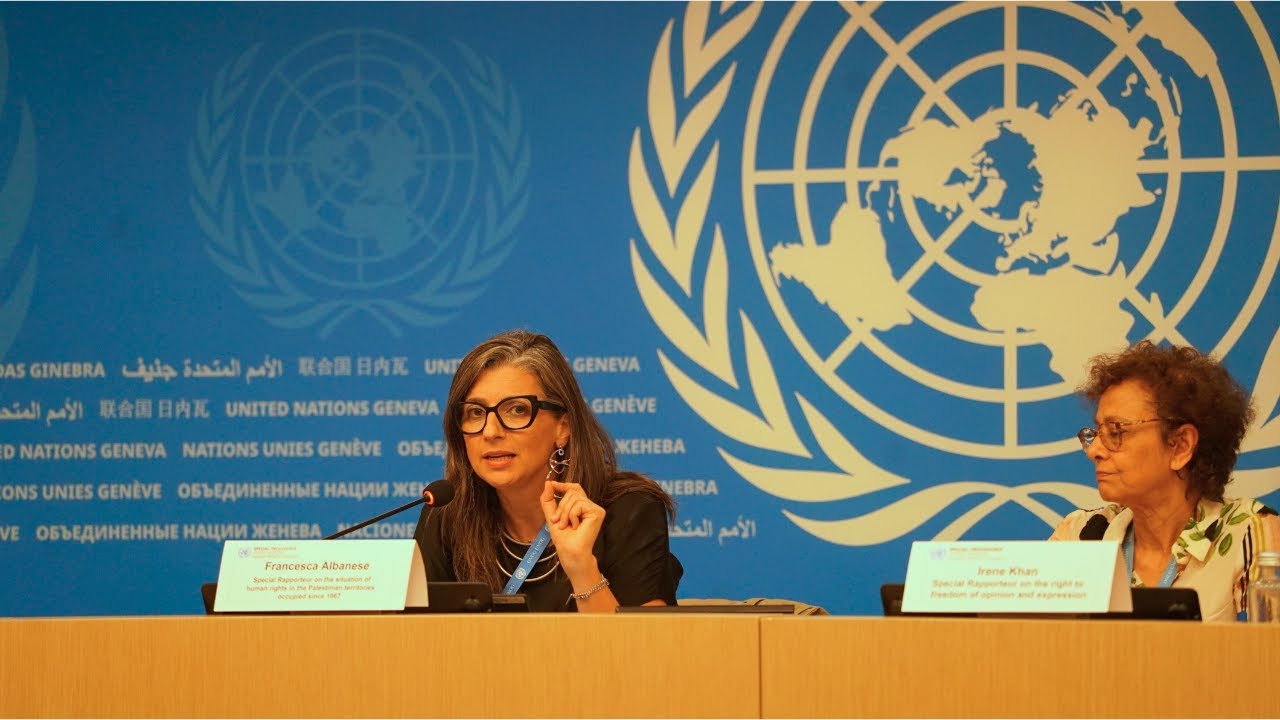
September 13, 2026Francesca Albanese: Special Rapporteur on the situation of human rights in the Palestinian territory occupied The ongoing removal, crushing, and transport of rubble in Gaza must not destroy evidence of international crimes
Unprecedented Environmental and Health Catastrophe and Collapse of Humanitarian Response Capacity Gaza Faces Deliberate Water Deprivation as Sewage Overflows
Unprecedented Environmental and Health Catastrophe and Collapse of Humanitarian Response Capacity
Gaza Faces
📌
Francesca Albanese , UN Special Rapporteur on the Situation of Human Rights in the Palestinian Territory Occupied Since 1967:
For more details please click the pdf below
.......................
Unprecedented Environmental and Health Catastrophe and Collapse of Humanitarian Response Capacity
Gaza Faces Deliberate Water Deprivation as Sewage Overflows
Francesca Albanese, UN Special Rapporteur on the Situation of Human Rights in the Palestinian Territory Occupied Since 1967:
“The ongoing removal, crushing and transportation of rubble in Gaza must not destroy evidence of international crimes.”
“Gaza’s rubble contains human remains and physical evidence relevant to investigations into alleged international crimes, including genocide.”
The majority of Gaza’s population of more than 2.1 million people continues to face displacement, living in severely overcrowded sites and camps.
Displaced people are living in dilapidated tents and makeshift shelters that are ill-equipped to withstand the approaching rainy season.
The shelter crisis in Gaza remains severe, with approximately 1.98 million people — around 90% of the population — in need of shelter assistance.
13 September 2026
Source: Al Mezan Center for Human Rights
The war of genocide against civilians in the Gaza Strip continues for the third consecutive year, alongside the ongoing policy of starvation and restrictions on the entry of humanitarian aid, fuel and medical supplies into Gaza. This comes amid the continued deterioration of humanitarian and health conditions and the accelerating collapse of infrastructure, particularly the sewage system. These conditions threaten to deepen the humanitarian and health catastrophe to unprecedented levels, dramatically increase the risk of epidemics and disease outbreaks, and directly endanger the lives of the population.
Continued bombardment and the rising death toll coincide with the collapse of Gaza’s health system, which is facing mounting pressure while its capacity to respond to escalating humanitarian and health needs continues to diminish.
The war of genocide against the Gaza Strip has caused an unprecedented humanitarian and health catastrophe, resulting in a dramatic increase in the number of injured people, particularly cases involving double amputations and complex limb-salvage procedures. The number of amputation cases has reached 5,000, while neurological and spinal injuries have reached 300 cases, and 10,000 people require intensive, long-term rehabilitation.
These growing numbers of injuries require readiness for urgent and effective intervention. However, the Israeli blockade has almost completely undermined the health system’s capacity to respond effectively.
According to the World Health Organization (WHO), of the 2,300 people with limb amputations assessed in Gaza between September 2024 and May 2026, only 500 — fewer than 25% — received permanent prosthetic limbs, due to the severe shortage.
In a development further increasing pressure on Gaza’s health sector, the main generator at Al-Ahli Arab Hospital in Gaza City stopped operating on the evening of Wednesday, 9 September 2026, due to mechanical failures. As a result, CT scanning services, sterilization services, the oxygen station and several other departments ceased operating.
Al-Ahli Arab Hospital provides services to approximately 1,000 people every day, offering comprehensive care including surgical procedures, outpatient clinics, diagnostic departments, wound and burn clinics, and physiotherapy. All these services are at risk of suspension due to the scarcity of spare parts and the lack of necessary lubricants and oils.
For its part, Gaza Municipality has warned of the catastrophic consequences of the rapidly deteriorating sewage system in the city, stressing that its continued collapse threatens to turn the city and its marine environment into an increasingly dangerous hotspot for health and environmental hazards.
An estimated 24,000 cubic metres of untreated sewage flows into the sea every day. This poses serious consequences for public health, causes severe damage to the marine ecosystem, increases the risk of epidemics and disease outbreaks, and exacerbates contamination of soil and groundwater.
The crisis has been compounded by extensive damage to sewage infrastructure. Destruction has affected eight wastewater treatment plants and 212,000 linear metres of sewage networks, while the East Bureij and Sheikh Ajleen treatment plants have also been damaged and rendered inoperable. This illustrates the scale of the collapse affecting this vital system and threatens serious long-term health and environmental consequences.
The Civil Defence continues its efforts to recover the bodies of those killed and missing from beneath the rubble of destroyed homes and buildings, amid enormous difficulties caused by the scale of destruction and the shortage of equipment and heavy machinery needed for debris removal.
Huge quantities of rubble continue to cover extensive areas of the Gaza Strip, while some authorities estimate that thousands of people remain missing beneath the debris. Restrictions on the entry of equipment, spare parts, machinery oils and fuel further heighten concerns over deteriorating sanitary conditions and the spread of health hazards.
Francesca Albanese, UN Special Rapporteur on the situation of human rights in the Palestinian Territory occupied since 1967, stated:
“The ongoing removal, crushing and transportation of rubble in Gaza must not destroy evidence of international crimes or prevent the recovery and identification of human remains in the besieged territory. Gaza’s rubble contains human remains and physical evidence relevant to investigations into alleged international crimes, including genocide. Palestinian authorities estimate that more than 10,000 people remain buried beneath the rubble.”
She further stressed that human remains must be recovered and identified with dignity, sites and materials must be systematically documented, potentially relevant evidence must be preserved, and an unbroken chain of custody under independent supervision must be maintained.
Albanese called for international criminal investigators to oversee the collection and preservation of vital evidence.
Water, Sanitation and Hygiene Crisis
Water, sanitation and hygiene conditions across the Gaza Strip remain at critical levels, amid the continuing collapse of infrastructure and severe restrictions on the population’s ability to access safe water.
Water insecurity has reached alarming levels. In early August, 91% of households experienced moderate to severe water insecurity, compared with 84% in June.
The situation has become even more acute as overcrowding increases at water collection points, accompanied by growing difficulties in obtaining sufficient quantities of water.
On 31 August, the temporary suspension of water desalination operations in Israel reduced water supplies available to approximately one million people in Gaza who rely on the Israeli water network. This further increased the fragility of Gaza’s water situation and exacerbated the humanitarian crisis facing the population.
Displacement and the Approaching Rainy Season
As the rainy season approaches, concerns are mounting over the increasing risk of flooding and further deterioration of living conditions throughout Gaza.
The majority of Gaza’s population of more than 2.1 million people continues to experience displacement and is living in extremely overcrowded sites and camps.
Displaced people are living in dilapidated tents and makeshift shelters that are ill-equipped to withstand the approaching rainy season, increasing the risks of flooding and disease outbreaks.
The National Shelter Cluster Coordinator for Palestine stated:
“The shelter crisis in Gaza remains severe, with approximately 1.98 million people — around 90% of the population — in need of shelter assistance.”
She explained that only approximately 10% of those in need have received some form of shelter support in recent months.
She warned that restrictions on the entry of shelter materials and funding shortages threaten the population’s ability to withstand the winter season, stressing that shelter materials must be allowed to enter regularly and sustainably, and that access to areas in need must be facilitated.
She further warned of another winter unfolding amid an acute shelter crisis.
End