Fact statements
September 13, 2026Palestinian Prisoners’ Club
Palestinian Prisoners’ Club 37 Palestinian Journalists Detained in Israeli Prisons 51% of Them Held in Administrative Detention
Palestinian Prisoners’ Club:
37 Palestinian Journalists Detained in Israeli Prisons
51% of Them Held in Administrative Detention
Ramallah – 13 September 2026
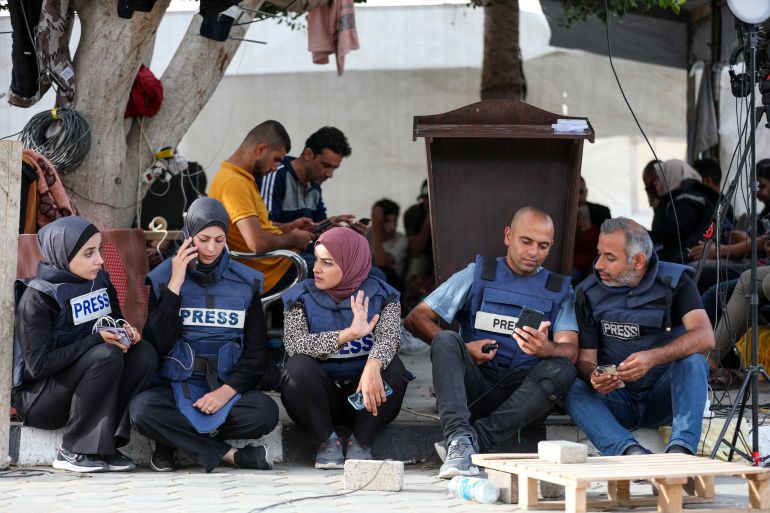
The number of male and female journalists currently detained in Israeli prisons has reached 37, all of whom have been arrested since the beginning of the genocide. This comes amid the Israeli authorities’ continued targeting of Palestinian journalists through arrests, harsh sentences, solitary confinement, and prosecution in connection with their journalistic work and their exercise of freedom of opinion and expression.
Among the most recently detained journalists are Muath Amarneh and Sabri Jibrin. Amarneh is one of the most prominent Palestinian journalists to have been repeatedly targeted by the Israeli authorities. This marks his third arrest, as part of an ongoing pattern of targeting him because of his journalistic work.
In the context of escalating sentences imposed on journalists on charges of so-called “incitement,” the Palestinian Prisoners’ Club highlighted the case of journalist and writer Mahmoud Fatafta, who was sentenced to 48 months in prison, one of the harshest sentences imposed in cases involving “incitement.” This reflects the increasing use of this charge against journalists, alongside the use of administrative detention without charge or trial, based on what Israeli authorities refer to as a “secret file.”
There are currently 19 journalists from the West Bank, including Jerusalem, held under administrative detention, representing 51% of all journalists currently detained.
Israeli authorities have placed detained journalist Bushra al-Tawil, 33, in solitary confinement, after transferring her from Damon Prison to isolation at Ramla Prison. This comes amid an escalation in policies of isolation and repression against Palestinian female prisoners, alongside starvation, denial of medical treatment, and harsh detention conditions, compounded by the spread of scabies and the lack of adequate hygiene and healthcare.
Detained journalists are subjected to the same system of violations and policies faced by Palestinian prisoners generally, including starvation, medical neglect and violations, torture, ill-treatment, and harsh detention conditions, in addition to solitary confinement and deprivation of fundamental rights.
The targeting of Palestinian journalists continues through arrests, prison sentences, solitary confinement, torture, killings, enforced disappearance, and direct attacks while carrying out their professional duties. These practices form part of what the Palestinian Prisoners’ Club describes as a systematic policy aimed at limiting journalists’ ability to report the truth and document crimes and violations.
ENDS