Fact statements
November 11, 2026The International Court of Justice

Security Council Elects Five Judges to the International Court of Justice
Security Council Elects Five Judges to the International Court of Justice
The case brought by South Africa concerns one of the gravest allegations that can be made against a State under international law, and the final judgment could affect Israel’s diplomatic and legal standing for years.
11 November 2026
On 3 November 2026, the General Assembly, acting alongside but independently of the Security Council, voted to fill five seats that will soon become vacant on the International Court of Justice, the principal judicial organ of the United Nations and one of its six principal organs.
After three rounds of voting, the 193-member General Assembly re-elected Mahmoud Daifallah Hmoud (Jordan) and Phoebe N. Okowa (Kenya), and elected Dapo Akande (United Kingdom), François Alabrune (France) and Rena Lee (Singapore) to nine-year terms beginning on 6 February 2027.
These seats represent one third of the Court’s 15 seats, in keeping with the practice of electing five members every three years. The three newly elected judges will replace Judge Ronny Abraham (France), Judge Dalveer Bhandari (India) and Judge Leonardo Nemer Caldeira Brant (Brazil), whose terms expire on 5 February 2027. Mr. Hmoud and Ms. Okowa, whose terms also expire on that date, will continue for another nine-year term.
Mr. Hmoud and Ms. Okowa were elected in May and November 2025, respectively, to replace Judge Nawaf Salam (Lebanon) and Judge Abdulqawi Ahmed Yusuf (Somalia), who resigned from their positions.
Before the vote, General Assembly President Khalilur Rahman (Bangladesh) informed delegations of the relevant correspondence received from the Secretary-General, including a memorandum on the vacancies, the candidates’ curricula vitae, nominations, and nominations and withdrawals submitted by national groups, as set out in documents A/81/118/Add.1 and A/81/118/Add.2.
Explaining the voting procedures, he informed delegations that 97 votes constituted the required absolute majority, based on the Organization’s 193 Member States, regardless of the number of States present and voting.
He also reminded delegations that, under Article 2 of the Court’s Statute, candidates must, regardless of nationality, be persons of high moral character who possess the qualifications required in their respective countries for appointment to the highest judicial offices, or be jurisconsults of recognized competence in international law.
He added that, under Article 9, the composition of the Court as a whole must ensure representation of the main forms of civilization and the world’s principal legal systems.
He explained that, with nine candidates competing for the five seats—as in the previous election for multiple seats in 2023—and in accordance with Article 11 of the Court’s Statute, voting would continue through successive rounds until five candidates obtained the required majority in both the General Assembly and the Security Council, and both organs elected the same candidates.
Based in The Hague, the Netherlands, the International Court of Justice is the principal judicial organ of the United Nations. It comprises 15 judges and adjudicates disputes between States, issuing judgments that are binding on the parties concerned. It also issues non-binding advisory opinions when requested to do so.
Jordanian Judge Previously Accused Israel of Genocide
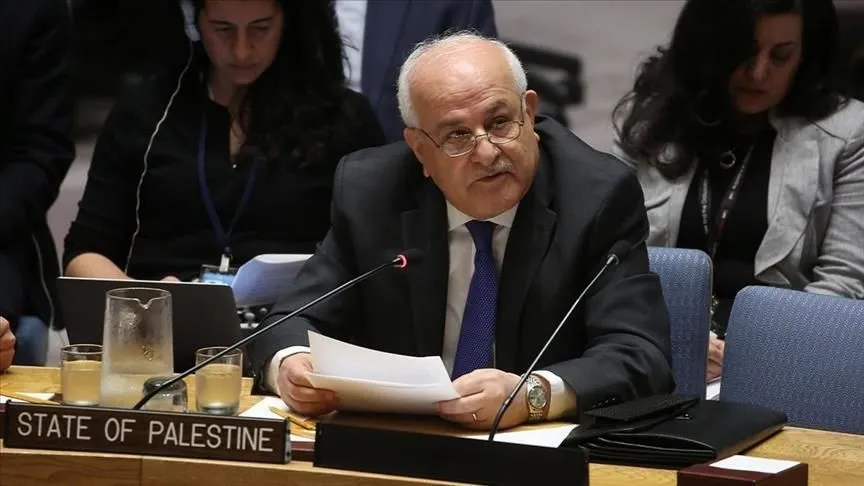
The figure attracting the strongest Israeli criticism is Jordanian Judge Hmoud, who has served on the International Court of Justice since May 2025.
Before joining the Court, Hmoud served as Jordan’s ambassador to the United Nations, legal adviser to the Jordanian Ministry of Foreign Affairs, and a member of the United Nations International Law Commission, which he chaired in 2021.
Throughout his diplomatic and legal career, Hmoud participated in presenting Jordan’s positions before international legal institutions on matters concerning Israel. These included the 2004 proceedings concerning Israel’s security wall and the 2024 proceedings concerning the legal status of Israel’s presence in the West Bank and East Jerusalem.
In October 2023, just weeks after the outbreak of the war on 7 October, Hmoud addressed the Security Council, accusing Israel of committing war crimes and violating international law.
During a meeting held on 30 October 2023, he said that the Security Council’s silence allowed Israel to act without accountability and accused it of harming civilians in the Gaza Strip.
Hmoud continued to level serious accusations against Israel as the war continued, describing its actions as “ethnic cleansing” and “genocide.”
Kenyan Judge Phoebe Okowa, Professor of International Law at Queen Mary University of London
Another judge whose appointment raised questions in Israel is Kenya’s Phoebe Okowa, Professor of International Law at Queen Mary University of London.
Okowa, who has served on the International Court of Justice since November 2025, previously served as a member of the United Nations International Law Commission and represented States in international legal proceedings.
In February 2024, Okowa was part of the legal team representing Namibia in advisory proceedings before the International Court of Justice concerning the legal consequences of Israeli policies in the Palestinian territories, including East Jerusalem.
In those proceedings, during which dozens of States presented their positions, the Court concluded in July 2024 that Israel’s continued presence in the Palestinian territories was unlawful.
The proceedings in which Okowa participated concerned an advisory opinion, rather than the genocide case brought by South Africa against Israel. This is a legally significant distinction, although both cases addressed Israel’s conduct under international law.
Among the newly elected judges with experience in legal proceedings concerning Israel is Dapo Akande, Professor of International Law at the University of Oxford and a member of the United Nations International Law Commission.
Akande has extensive experience representing States before international courts and advising governments on legal matters.
Among his previous roles, he served as legal counsel to Japan in the proceedings that led to the International Court of Justice’s 2024 advisory opinion concerning Israeli policies in the West Bank and East Jerusalem.
The New Judges Have Extensive Experience in International Law
The other two judges have extensive backgrounds in international law and diplomacy.
Alabrune, currently France’s ambassador to the Netherlands, previously served as legal adviser to the French Ministry of Foreign Affairs and represented France in international proceedings.
His work included cases concerning the Convention on the Prevention and Punishment of the Crime of Genocide, including proceedings involving Russia and Ukraine, as well as Myanmar.
Rena Lee, Singapore’s Ambassador for International Law, has extensive experience in the law of the sea, international arbitration and multilateral negotiations.
Between 2018 and 2023, she chaired the international conference that led to the adoption of the United Nations agreement on protecting biodiversity on the high seas.
She is also the first Singaporean citizen to be elected to the International Court of Justice.
South Africa’s Genocide Case Could Continue for Years
In December 2023, South Africa instituted proceedings against Israel, alleging that its military operations in the Gaza Strip violated the Convention on the Prevention and Punishment of the Crime of Genocide.
Israel rejects these allegations and maintains that it acted in self-defence.
The International Court of Justice ordered several provisional measures in the case during 2024, but it has not yet ruled on whether Israel committed genocide.
The proceedings are expected to continue for several more years.
Under an order issued in May 2026, South Africa was given until November 2027 to submit its reply to Israel’s arguments, while Israel may submit a rejoinder by May 2029.
This timetable means that the judges elected this week could be among the members of the Court hearing the subsequent stages of the case, and potentially delivering the final judgment if it is issued during their terms.
Nevertheless, judges of the International Court of Justice are required to act independently, rather than as representatives of their countries.
Article 17 of the Court’s Statute also restricts judges’ participation in cases in which they previously took part as advocates or legal advisers, or in other capacities specified in the Statute.
Whether these restrictions apply to a particular judge depends on the circumstances of the proceedings concerned.
This distinction is particularly important for Okowa and Akande. Both participated in the advisory proceedings concerning the Palestinian territories, but those proceedings are separate from the genocide case brought by South Africa.
Their election therefore does not, in itself, establish that they are legally barred from participating in the case against Israel, nor does it provide a basis for prejudging how they will rule.
For Israel, however, the elections represent more than a routine change in the Court’s composition. Several of the elected judges previously participated in legal proceedings concerning the Israeli-Palestinian conflict. The Jordanian judge, in particular, levelled serious accusations against Israel following the outbreak of the war on 7 October 2023.
Israel’s Ambassador to the United Nations, Danny Danon:
“The professional backgrounds of the newly elected judges to the Court in The Hague are concerning and raise questions.”
“Will a judge who wrongly concluded, just one month after the 7 October massacre, that Israel was committing genocide be able to examine the case against it impartially? And will a judge who advised on legal proceedings against us act professionally and without bias in the pursuit of justice?”
“Today’s elections in the General Assembly are yet another example of the United Nations’ structural bias against the State of Israel.”
In a statement following the elections, Danon criticized the Court’s new composition and questioned its ability to independently consider the case concerning Israel.
The ambassador wrote: “The new judges in The Hague: one absurdly accused Israel of war crimes a month after the 7 October massacre, while another advised on legal proceedings against us.”
He added: “Five judges have been elected at the United Nations to the International Court of ‘Justice,’ which is expected to continue hearing the baseless case against Israel.”
Danon also said that “electing judges who have previously taken positions against Israel casts a heavy shadow over the Court’s ability to consider our case impartially.”
For Israel, the Court’s composition is more than a procedural matter.
The case brought by South Africa concerns one of the gravest allegations that can be made against a State under international law, and the final judgment could affect Israel’s diplomatic and legal standing for years.
The election of five judges for terms extending until 2036 means that the new members will help shape the Court’s decisions over the coming decade.
End