Fact statements
September 3, 2026The “Disengagement 710” Plan Targets the Departure of 1.86 Million Palestinians
“Voluntary Emigration” as an Electoral Platform: Ben-Gvir Turns the Displacement of Gaza’s Population into an Implementable Political Project
“Voluntary Emigration” as an Electoral Platform: Ben-Gvir Turns the Displacement of Gaza’s Population into an Implementable Political Project
The “Disengagement 710” Plan Targets the Departure of 1.86 Million Palestinians Within Seven Years and the Establishment of a Dedicated Israeli Ministry for Emigration
3 September 2026 - Human Rights Report
Israeli National Security Minister and Otzma Yehudit leader Itamar Ben-Gvir has placed the removal and displacement of Gaza’s population at the heart of his election campaign through a plan known as “Disengagement 710.” According to details revealed by Yedioth Ahronoth/Ynet on 3 September 2026, the plan seeks the departure of 250,000 Palestinians during the first year, 1.11 million within three years, and approximately 1.86 million within seven years
The significance of the plan lies not only in the unprecedented scale of its numerical targets, but also in the transformation of rhetoric advocating the displacement of Palestinians from scattered ideological statements into a detailed electoral programme with timelines, budgets, administrative mechanisms and proposed international agreements, alongside a demand to establish a dedicated Israeli government ministry tasked with implementing it
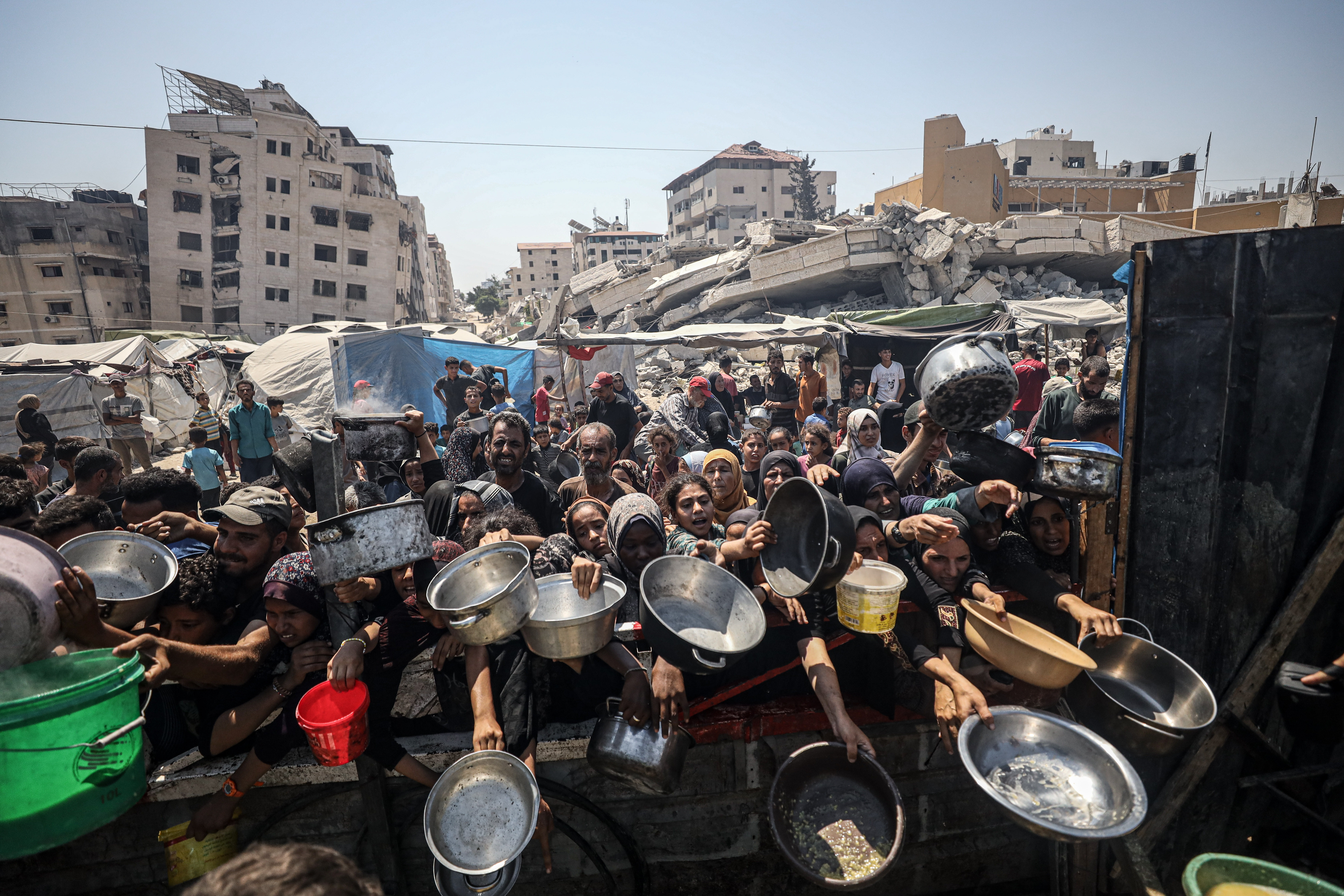
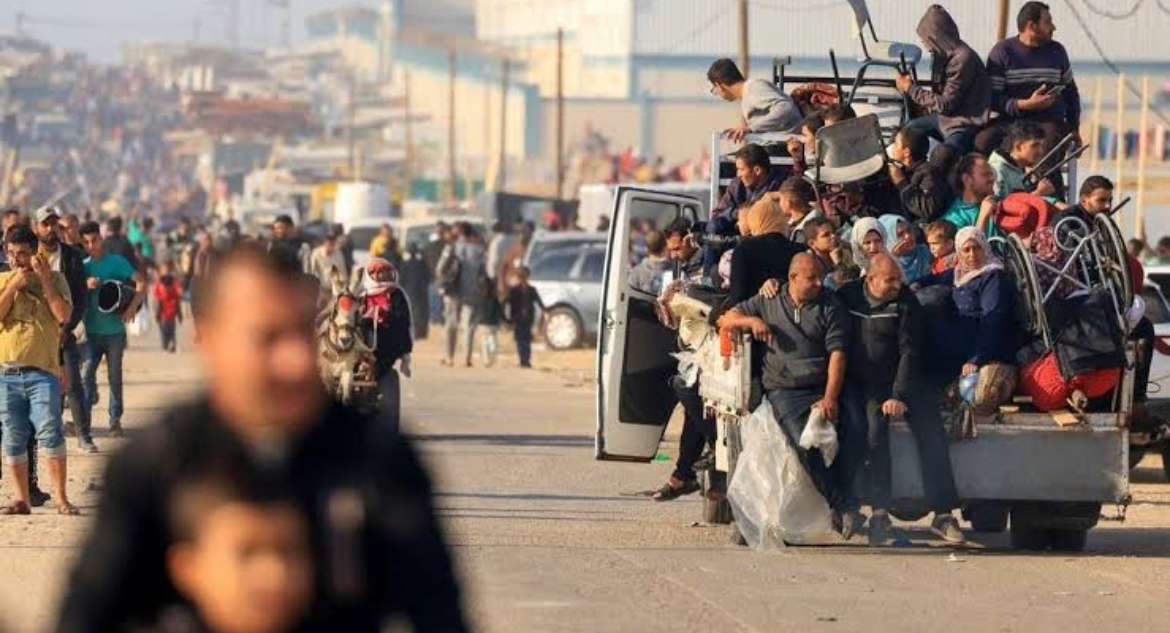
From a human rights perspective, turning the removal of the overwhelming majority of Gaza’s population into an electoral issue raises extremely serious concerns about the normalisation of mass displacement within Israeli political discourse, particularly when such proposals are directed at a population that has endured years of war, repeated displacement, destruction of homes and infrastructure, and severe restrictions on access to food, shelter and essential services
- ?What Does the “Disengagement 710” Plan Entail
According to Ynet, Ben-Gvir has been working on the plan for several months and intends to market it as one of the central pillars of his election campaign
The plan sets three explicit numerical targets
- 250,000 Palestiniansleaving the Gaza Strip during the first year
- 11 million Palestiniansleaving within three years
- Approximately 86 million Palestiniansleaving within seven years
The plan therefore does not concern limited travel by specific categories of people for treatment, education or other temporary purposes. Rather, it envisages a large-scale project that, if its final target were achieved, could result in the departure of the overwhelming majority of Gaza’s population
- An Individual “Migration Track” for Every Palestinian or Family
The plan presents itself as a project for “voluntary emigration” and proposes establishing an individual file and personalised travel pathway for every person or family that agrees to leave
The proposed pathway would include an approved destination country, regularisation of legal status, documents and visas, travel financing, initial accommodation, vocational training, assistance in finding employment, and support and accompaniment for up to 24 months after departure
According to Ben-Gvir, countries being considered as possible destinations include Türkiye, Ethiopia, Congo and several Arab states.
Ynet also reported that Israeli authorities had previously held contacts with African countries, including Ethiopia, Congo and Somaliland, in an effort to identify destinations willing to receive Palestinians from Gaza, but these efforts have so far failed to achieve the desired outcome.
- Twelve Principles for Organising the Departure of the Population
According to the published details, the programme is based on 12 operational principles:
- Departure would, according to the plan, be exclusively “voluntary.”
- No departure would be permitted without a designated destination country and an organised legal status.
- An individual file would be created for every person or family.
- Family unity would be maintained.
- A broad range of destination countries would be made available.
- Migration pathways would be created based on employment, education, medical treatment, family reunification and community care.
- An absorption and rehabilitation package would be provided.
- Payments would be made to receiving countries and entities based on performance.
- Each applicant would undergo an individual security screening.
- International actors would participate in the programme.
- Annual measurable performance targets would be established.
- Monthly reports would be issued detailing applications, approvals, departures, costs and absorption outcomes in destination countries.
This level of detail moves the proposal beyond general political rhetoric about “migration” and towards a proposed administrative infrastructure capable of processing hundreds of thousands of people annually.
- Tens of Billions of Shekels to Finance the Project
Ben-Gvir is not presenting the project as a symbolic proposal.
The plan calls for an initial Israeli investment of 10 billion shekels for establishment and initial operations, alongside a supplementary Israeli financing framework that could reach 50 billion shekels, subject to international participation and agreements with receiving countries.
Israeli media coverage has also indicated the possibility of offering tens of thousands of dollars to certain families as part of financial incentives for departure.
This raises one of the most significant human rights questions surrounding the project:
Can the decision of a person living amid destruction, homelessness, unemployment and the collapse of essential services genuinely be regarded as “free” if that person is offered money, housing and an opportunity to escape an environment that has largely become uninhabitable?
- A Ministry for “Emigration” as a Condition for Joining the Government
Ben-Gvir does not intend to limit the proposal to election campaigning.
According to Yedioth Ahronoth, Otzma Yehudit intends to make adoption of the project a condition in any negotiations to join Israel’s next government.
Ben-Gvir would demand the establishment of a dedicated government ministry for what he calls “voluntary emigration,” consisting of:
- A minister;
- A director-general;
- An independent budget;
- Executive powers;
- A team responsible for negotiating with foreign governments; and
- An independent implementation mechanism.
This aspect gives the proposal significance far beyond electoral campaigning. It seeks to transform the removal of Palestinians from Gaza into a formal state policy backed by a permanent institutional structure should Ben-Gvir’s party become an influential partner in the formation of the next coalition government.
- Displacement as a Tool in the Competition for Right-Wing Votes
The plan is being introduced amid intense electoral competition within Israel’s right-wing political camp.
Ynet explicitly states that Ben-Gvir is using the proposal in an attempt to outflank Benjamin Netanyahu from the right and pressure him into adopting the concept of “voluntary emigration.”
The idea has also appeared in the electoral platform of right-wing candidate Ofer Winter, increasing the possibility that the displacement of Palestinians could become a subject of political bidding within the Israeli right during the election campaign.
The elections are taking place amid visible fragmentation within the right-wing bloc and efforts to unite smaller parties ahead of the 27 October 2026 elections, making security, the war and Gaza’s future central instruments in the competition for right-wing voters.
From this perspective, the plan performs a dual function: it is both a long-term political project and an intensive electoral message aimed at the Israeli right-wing constituency.
- From “Transfer” to “Voluntary Emigration”
The project also has clear ideological roots.
Ynet refers to the precedent of Israeli right-wing politician Rehavam Ze’evi and his Moledet Party in the 1990s, when the term “transfer” became an explicit component of Israeli political discourse.
Ben-Gvir is now attempting to repackage the idea in a different form.
Rather than explicitly advocating expulsion by force, the new model is promoted through economic incentives, destination countries, regulated legal status and financing for resettlement.
Ben-Gvir describes the proposal as a “correction” of Israel’s 2005 disengagement from Gaza rather than a repetition of it, and directly links it to the events of 7 October 2023.
According to the Israeli report, a large-scale billboard campaign inside Israel is also planned to promote the proposal, while a similar publicity campaign in a number of African countries is being considered.
This further illustrates how the fate of millions of Palestinian civilians is being transformed into an electoral and advertising product.
- Can Migration Be “Voluntary” in a Coercive Environment?
This is the central legal question.
Simply describing departure as “voluntary” does not, by itself, determine its legal character.
International criminal law does not limit the concept of coercion to the direct use of physical force.
The Elements of Crimes of the International Criminal Court indicate that coercion may include threats of force, fear of violence, duress, detention, psychological oppression, abuse of power, as well as taking advantage of a coercive environment.
International criminal jurisprudence has also recognised that displacement does not require physically forcing people out of their homes before it can be considered coercive.
This standard is particularly significant in relation to Gaza.
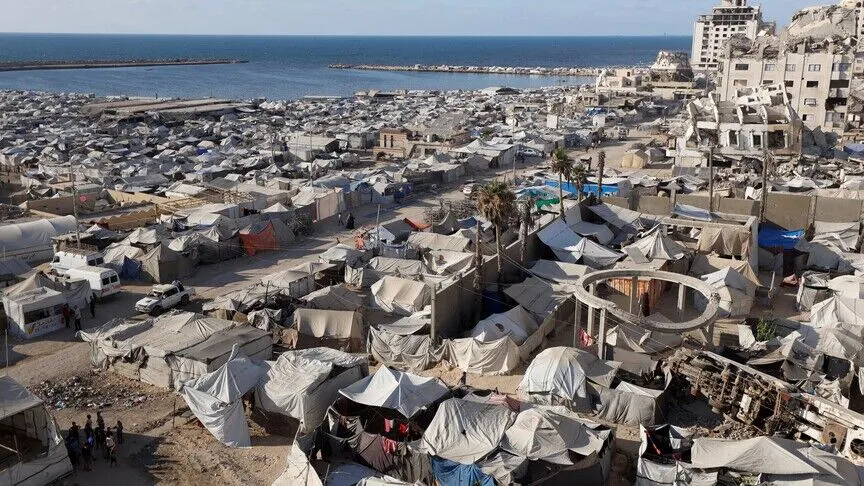
UN experts have documented massive destruction of homes and infrastructure, the displacement of the overwhelming majority of the population, and severe restrictions on the ability of residents to return and rebuild.
An official communication by UN experts in December 2025 stated that at least 92% of housing units in Gaza had been damaged or destroyed, more than 90% of the population had been displaced, and more than 86% of the territory of the Gaza Strip had been subjected to displacement orders or designated as Israeli military zones during the period addressed.
Any programme described as “voluntary emigration” must therefore be assessed in light of the environment in which individuals are being asked to make their decision.
If a person is first forced to live without a home, amid severe shortages of food, water and medical treatment, or is prevented from returning to their area or rebuilding their home, and is then offered money and accommodation in another country in exchange for permanent departure, the genuine freedom of that person’s consent becomes a fundamental legal question rather than a matter of terminology.
- The Geneva Convention Prohibits Forcible Transfer and Deportation
Article 49 of the Fourth Geneva Convention explicitly prohibits individual or mass forcible transfers, as well as deportations of protected persons from occupied territory to the territory of the occupying power or to that of any other country, regardless of motive.
The Convention permits evacuation only under exceptional and temporary circumstances required by the security of the population or imperative military reasons, and requires displaced persons to be returned to their homes once the circumstances necessitating the evacuation have ceased.
Accordingly, implementation of a policy leading to the permanent and large-scale transfer of Gaza’s population to other countries, if shown to have resulted from coercion or the exploitation of coercive conditions, could give rise to serious responsibilities under international humanitarian law.
- Potential Responsibility Under the Rome Statute
The Rome Statute of the International Criminal Court defines the “deportation or forcible transfer of population” as the forced displacement of persons lawfully present in an area by expulsion or other coercive acts, without grounds permitted under international law.
Where such acts are committed as part of a widespread or systematic attack directed against a civilian population, they may amount to a crime against humanity under Article 7.
The Rome Statute also provides for war crimes concerning the unlawful deportation or transfer of protected populations in situations of occupation and armed conflict.
The practice of the ICC in other situations, including Ukraine, demonstrates the seriousness with which international criminal law treats the transfer of inhabitants of occupied territories outside their territory.
This does not mean that the mere announcement of an electoral plan automatically proves the commission of an international crime. Individual criminal responsibility requires proof of the relevant acts as well as the material and mental elements of each offence.
Nevertheless, transforming the removal of approximately 1.86 million people into an official, time-bound and financially funded objective, against the background of massive destruction and displacement, warrants serious legal documentation from the outset.
- The Risk Does Not Begin Only When the Plan Is Implemented
From a human rights perspective, concern should not be confined to whether states will ultimately agree to receive Palestinians.
The Israeli newspaper itself notes that previous attempts to find countries willing to receive large numbers of Gaza residents encountered significant obstacles and that the plan’s prospects for success remain uncertain.
But the human rights danger exists even before implementation.
When the removal of a people from their land becomes an ordinary subject of electoral competition; when the plan’s performance is measured according to the number of people leaving every year; and when budgets, institutions and proposed ministries are dedicated to achieving that objective, displacement begins to enter the realm of normalised political policy rather than being addressed as an issue affecting the rights of a protected population under international law.
This is what makes “Disengagement 710” more than an electoral manoeuvre.
It constitutes an attempt to repackage the concept of transfer in administrative, humanitarian and economic language that appears more acceptable on the surface.
The terminology does not say:
“We will deport 1.86 million Palestinians.”
Instead, it speaks of:
“travel pathways,” “employment assistance,” “rehabilitation,” and “destination countries.”
Yet the legal test does not depend on the name given to a policy by its proponents.
It depends on the circumstances that drove people to leave, their genuine ability to remain and return, and whether their decision was truly free or was instead produced by a coercive environment.
- Indicators That Human Rights Organisations Should Document and Monitor
Human rights organisations should closely follow a range of developments related to the plan throughout the election campaign and beyond, including:
- Any official written version of the “Disengagement 710”
- The names of experts and officials involved in drafting it.
- The structure and sources of the proposed budget.
- Countries contacted by Israel about receiving Palestinians from Gaza.
- Any financial commitments offered to governments or entities in exchange for receiving Palestinians.
- The proposed mechanism for “individual security screening.”
- Whether permission to leave would be accompanied by a guaranteed legal right to return to Gaza.
- The status of ownership rights over homes and land belonging to those who leave.
- Whether departing persons would be required to renounce residency or other legal rights.
- Any discriminatory restrictions on humanitarian assistance or reconstruction that could make departure more attractive or remaining more difficult.
- The establishment of an official Israeli ministry or authority responsible for implementing the project.
- Incorporation of the plan into a future coalition agreement or the basic policy guidelines of Israel’s next government.
The issue of the right to return to Gaza is particularly important.
By its nature, genuinely free migration allows a person to leave without stripping them of their rights in their homeland or preventing their return.
If, however, departure is effectively permanent and linked to permanent resettlement and a prohibition on return, the legal assessment changes fundamentally.
Human Rights Conclusion
The “Disengagement 710” plan reveals a new stage in Israeli discourse concerning Palestinian displacement.
The issue is no longer merely a minister calling for Palestinians to leave Gaza. According to the published details, it has become a numerically defined, institutional, financial and electoral programme:
- 250,000 Palestinians in one year.
- 11 million within three years.
- 86 million within seven years.
- 10 billion shekels in initial funding.
- A financing framework of up to 50 billion shekels.
- A ministry for emigration.
- An international negotiating team.
- Receiving countries.
- Monthly reports measuring the number of departures.
Perhaps the most dangerous aspect of the project is not merely the possibility that it could be implemented, but the transformation of the idea of emptying Gaza of the majority of its population into a policy that can be presented to Israeli voters as a legitimate government programme.
In a territory whose population has endured repeated displacement, the loss of homes, destruction of infrastructure and severe humanitarian restrictions, the description of such departures as “voluntary” cannot be assessed in isolation from those conditions.
International law does not ask only:
Did the Palestinian sign a request to leave?
It must also ask:
What conditions was that person placed under before signing?
Did that person genuinely have a realistic and safe option to remain in their homeland?
Any attempt to implement a plan of this nature therefore requires strict international and legal scrutiny, as well as early documentation of all decisions, financing arrangements, contacts, negotiations and individuals involved.
The right of a Palestinian to leave Gaza must never be transformed into a mechanism for depriving that Palestinian of the right to remain there or to return.
Human Rights Recommendations
Human rights organisations recommend the following:
- The United Nations and its relevant mechanisms should document the plan, its electoral discourse and any implementation measures arising from it.
- States named as potential destination countries should clearly affirm that they will not participate in any arrangement that violates the prohibition on forcible transfer.
- Statements by officials, documents, budgets and negotiations relating to the project should be preserved as material potentially relevant to future international investigations.
- Any genuine humanitarian departure programme must be based on free and informed choice, without pressure, deprivation or coercion, and without extinguishing rights relating to property, residency or return.
- The international community should refuse to finance any mechanism whose measure of success is the permanent demographic reduction of the Palestinian population of the Gaza Strip. Instead, international efforts should focus on creating conditions that enable Gaza’s population to remain on their land and rebuild their homes and lives there.
End of Report