Fact statements
September 29, 2026“As an international community, we should ensure, and the United Nations should ensure, that there is one Palestine, one recovery plan, one government and one approach.”
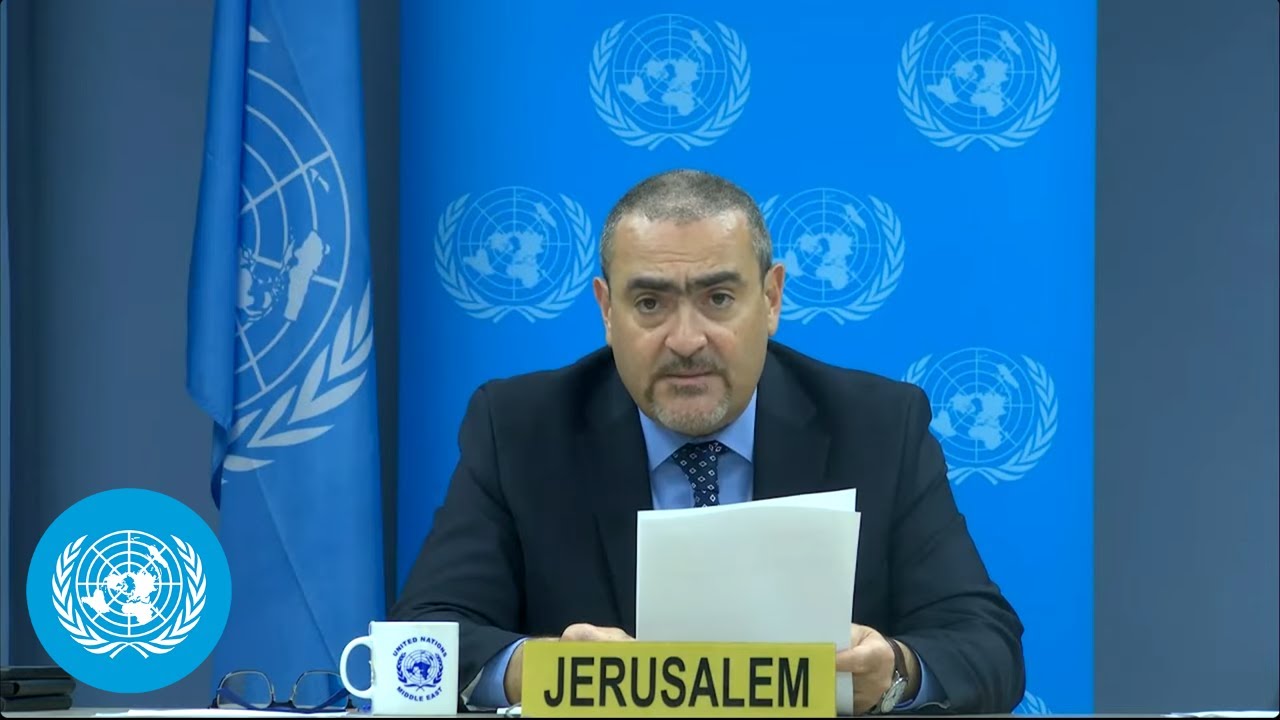
UN Coordinator in Palestine, Ramiz Alakbarov:
UN Coordinator in Palestine, Ramiz Alakbarov:
“As an international community, we should ensure, and the United
Nations should ensure, that there is one Palestine, one recovery plan, one government and one approach.”
29 September 2026 – Geneva
Ramiz Alakbarov, United Nations Humanitarian Coordinator in the Occupied Palestinian Territory and Acting United Nations Special Coordinator for the Middle East Peace Process, speaking on the margins of the High-Level Week of the General Assembly:
“We are here during High-Level Week to meet with our counterparts from various international organizations, our colleagues within the United Nations, as well as Member States, and to discuss all issues related to Palestine.
More specifically, this week we participated in the meeting of the Ad Hoc Liaison Committee on Palestine. A meeting of the Global Alliance for the Implementation of the Two-State Solution was also held, and we participated in a number of other side events related to Gaza and its reconstruction.
Essentially, therefore, our engagement covers all matters relating to the Occupied Palestinian Territory and the work of the United Nations during the General Assembly meetings.”
The Situation in Gaza
“There is a recurring cycle of problems in Gaza. One year after the ceasefire, and despite progress in bringing in essential items such as food and nutritional supplies, we have still not been able to resolve one of the most persistent problems: water and sanitation.
People still do not have sufficient access to clean water. There is also no regular water supply to different areas, which is why we are carrying out extensive water trucking and distribution operations.
This is closely connected to the fact that sewage treatment, cleaning and management operations have not yet resumed.
Most displaced people are living in tents rather than prefabricated structures or permanent housing.
This also affects health outcomes, because the absence of clean water, adequate shelter and proper waste management — or the limited availability of waste management and clean water — leads directly to health problems.
This is at the heart of the difficulties facing the people of Gaza today.
Jobs have not yet been restored, and people remain heavily dependent on the cash transfers we provide.
Their ability to purchase goods available in the market, particularly food and other essential items, is also highly dependent on these cash transfers.
UNRWA continues to operate.
It is, of course, facing significant difficulties in carrying out its work because of the restrictions imposed on the organization.
Our UNRWA colleagues are working in solidarity with all United Nations agencies, non-governmental organizations and all humanitarian partners operating on the ground.
At present, only one crossing is open for our personnel to rotate into and out of Gaza.
It is the same crossing that serves as the principal entry point for supplies. We are referring to the Kerem Shalom crossing.
The other crossings remain closed.
Once again, the policy concerning dual-use items places serious restrictions on our efforts to launch early-recovery activities.
We continuously face difficulties in bringing in the shelter materials required, particularly for the construction of more sustainable accommodation.
Many of these materials are classified by the occupying Power as dual-use items.
This means that anything that could be used, for example, in the construction of a structure or facility may be interpreted as something that could potentially be used to reinforce tunnels, or anything containing metal may be considered capable of being used for other purposes.
However, the scope of materials covered is extremely broad, and there is no comprehensive list.
For example, we are unable to bring in prefabricated buildings. We can, however, bring in refugee housing units, which are largely made of plastic.
We are carrying out extensive work in the water and sanitation sector.
This includes water trucking and the rehabilitation of water treatment facilities.
A desalination plant is also operating — at least one that I visited during my most recent visit — and there are several other sites where desalination operations are under way.
Debris management is another major challenge.
We have just completed, or are close to completing, the clearance of Firas Market, which had become one of the main waste accumulation sites during and after the war.
The accumulated waste had formed a mound approximately the size of an eight-storey building.
It has now been almost completely removed, and we expect some commercial activity in the market to resume soon.
We are also supporting local farmers with basic equipment to allow them to resume agricultural activity wherever possible.
Unfortunately, only 3 per cent of land is currently accessible for agricultural activity, and only 10 per cent of greenhouses are available for use.
There is also a great deal of work being carried out in other areas.
Educational efforts are of critical importance.
Approximately 300,000 children or more are receiving education in temporary learning spaces.
The people of Gaza are exhausted.
They want to return to normal life.
They are asking not to have to spend another winter in tents.
They need better housing and better places in which to spend the winter.
The people of Gaza want to work.
The population of Gaza is highly skilled.
It is one of the most highly educated places in the world, because people have lived in isolation for a long period of time.
Historically, significant investment in education and the prioritization of education have played an important role in this.
Therefore, the first thing people ask for is for their children to be able to return to school.
The people of Gaza want to contribute actively to the recovery of their land and the rebuilding of Gaza.
But for that to happen, we need construction materials, equipment, engine oils and fuel.
Essentially, we need to bring in everything required for normal life.
They want to rebuild their lives.
More than 8,000 people remain beneath the rubble.
Families are asking to be given the opportunity to recover their dead, bury them and lay them to rest with dignity.
Restoring the water and sanitation system and restoring electricity supplies are among the main demands of the people of Gaza.”
The Situation in the West Bank
“The situation in the West Bank is extremely tense.
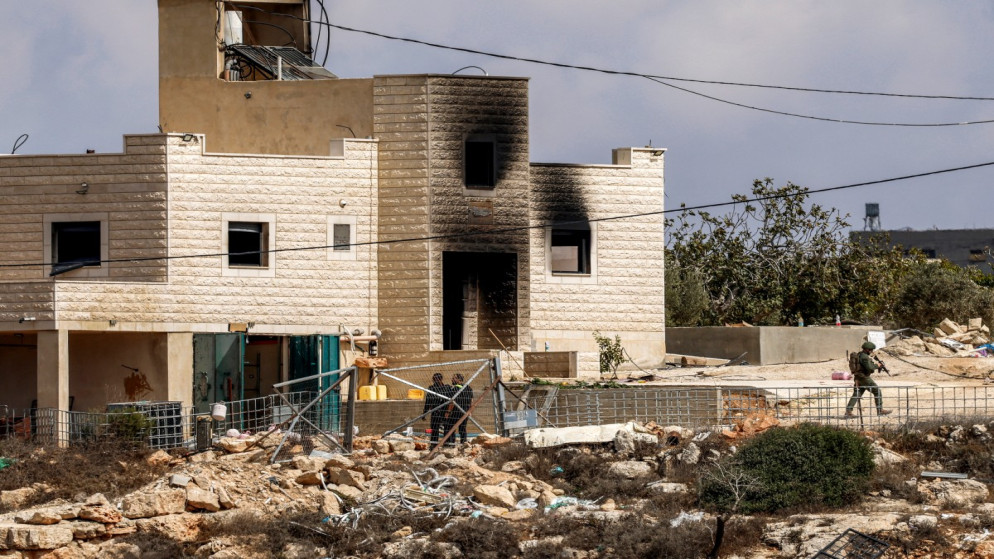
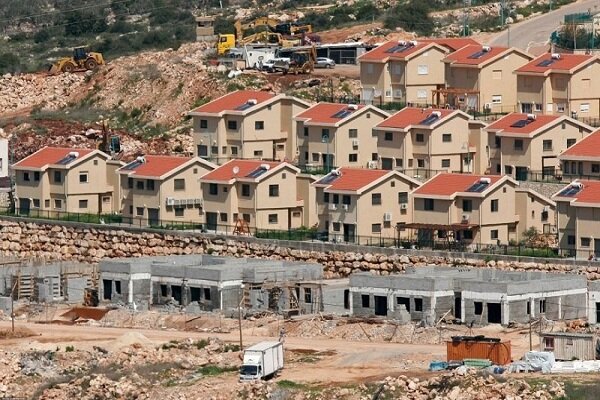
What we are seeing is very intensive settlement activity and the continued harassment of Palestinian communities.
On one occasion, I visited a community where all the olive trees had been cut down.
I visited homes that had been demolished, including schools and community facilities.
Livestock is also being stolen.
This has become a persistent feature of life in the West Bank.
Attacks and incitement to violence have now reached a new level.
It is an extremely serious situation, and the issue is not limited to violence alone.
There are also other issues, including banking arrangements.
As you know, restrictions have been imposed on transferring physical shekel cash from the Palestinian territories back to Israel.
The correspondent banking arrangements between Palestinian and Israeli banks had previously been renewed continuously on a monthly basis.
Now, however, they are only being renewed until the end of the year.
Salaries are being paid at only 50 per cent.
We have programmes that provide assistance to those affected.
For example, if a community is subjected to violence, if olive trees are cut down or if livelihoods are damaged, we provide grants.
We try to help families affected by violence in the West Bank rebuild their lives, and we have a rapid-response mechanism.
We seek to support families economically and help them restore their livelihoods.
We also provide cash assistance and address other needs that these communities may have.
This includes legal protection and follow-up through coalitions comprising a number of non-governmental organizations working in this field.
Essentially, therefore, the objective is to protect them economically while also protecting their rights.”
The Two-State Solution and Elections
“We need to address the two-State solution comprehensively.
This week, the Global Alliance for the Implementation of the Two-State Solution reaffirmed the international community’s strong commitment to, and support for, the two-State solution.
On the ground, we must continue working along all tracks.
There is a need to stop incitement to violence, and there is a need to rebuild trust within communities.
Non-governmental organizations and others have an important role to play in this regard.
There is no alternative to the two-State solution, and Palestinian elections will be an important factor in supporting it.
As an international community, we must use the necessary good offices to ensure that the occupying Power — in this case Israel — halts illegal settlement activity, returns to negotiations with the Palestinians, and addresses this issue directly.
There is no alternative to the two-State solution.
Palestinian institutions must be unified.
The National Committee for the Administration of Gaza and the Palestinian Authority must work together side by side.
As an international community, we should be guided in all our actions by the principle — and the United Nations should ensure — that there is one Palestine, one recovery plan, one government and one approach.
Palestine must not, under any circumstances, be viewed as separate programmes for Gaza and separate programmes for the West Bank.
We need to support Palestinian elections this year.
Elections in Palestine will be an important factor in supporting the two-State solution and moving the political horizon forward.”
End