Fact statements
September 28, 2026Office of the United Nations High Commissioner for Human Rights:
214 Companies Involved in Activities Linked to Illegal Israeli Settlements
214 Companies Involved in Activities Linked
to Illegal Israeli Settlements
Office of the United Nations High Commissioner for Human Rights:
The vast majority of companies contribute to adverse impacts on the Palestinian people’s right to self-determination
28 September 2026
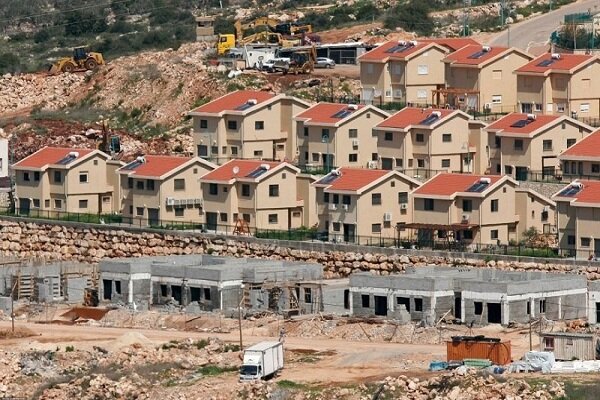
The Office of the United Nations High Commissioner for Human Rights (OHCHR) has verified the involvement of 214 companies from 11 countries in activities within illegal Israeli settlements in the Occupied Palestinian Territory and called on these companies to take action to address the adverse human rights impacts associated with their activities.
This was stated in a report updating the database established by OHCHR in 2020, which lists companies involved in specified activities related to Israeli settlements across ten categories, pursuant to a mandate from the Human Rights Council.
The latest report focuses on companies operating in the agriculture, transportation, storage, waste management, energy, food and hospitality sectors. OHCHR added 61 companies to the list, while removing five companies that had previously been listed after determining that they were no longer involved in such activities.
OHCHR indicated that it is continuing to review the remaining companies whose assessments could not be completed in time for the release of this report, following a public call for submissions issued in 2024. Of the information received concerning 596 companies, OHCHR reviewed information relating to 215 companies last year and an additional 126 companies this year.
Assessment Criteria
OHCHR’s assessment focuses on companies’ impact on the Palestinian people’s right to self-determination. Due to limited resources, it does not assess their impact on other rights.
OHCHR classifies corporate involvement into three levels:
Causation: where the company’s activities are sufficient in themselves to affect individuals’ ability to enjoy a human right.
Contribution: where the activities of a company, together with those of another party, affect the enjoyment of a human right.
Direct linkage: where a company’s operations, products or services are considered directly linked to adverse human rights impacts.
Of the 214 companies included on the list, the vast majority — 200 companies — were found to contribute to adverse impacts on the right to self-determination, while 14 companies were directly linked to such impacts. No company was found to have directly caused such impacts.
United Nations High Commissioner for Human Rights Volker Türk stressed that the report serves as a reminder to companies that “they have responsibilities with respect to human rights and are expected to exercise due diligence to ensure that they are not involved in human rights violations or abuses.”
Role of Member States
This update follows two recent OHCHR reports on the involvement of business and economic interests in adverse human rights impacts in the context of the ongoing conflicts in Sudan and Myanmar.
The report reaffirmed the obligations of States to take appropriate measures — judicial, administrative, legislative or otherwise — to ensure that those affected have access to effective remedies, in accordance with international law, in cases where human rights violations linked to business activities occur within their territory or jurisdiction.
The overwhelming majority of companies included on the list are Israeli companies. The other listed companies are from:
United States: 8
Spain: 3
United Kingdom: 2
France: 2
China: 2
South Africa: 1
Luxembourg: 1
Netherlands: 1
Germany: 1
Mexico: 1
The full list of companies can be consulted in the attached file.
End