Fact statements
October 4, 2026Francesca Albanese, UN Special Rapporteur
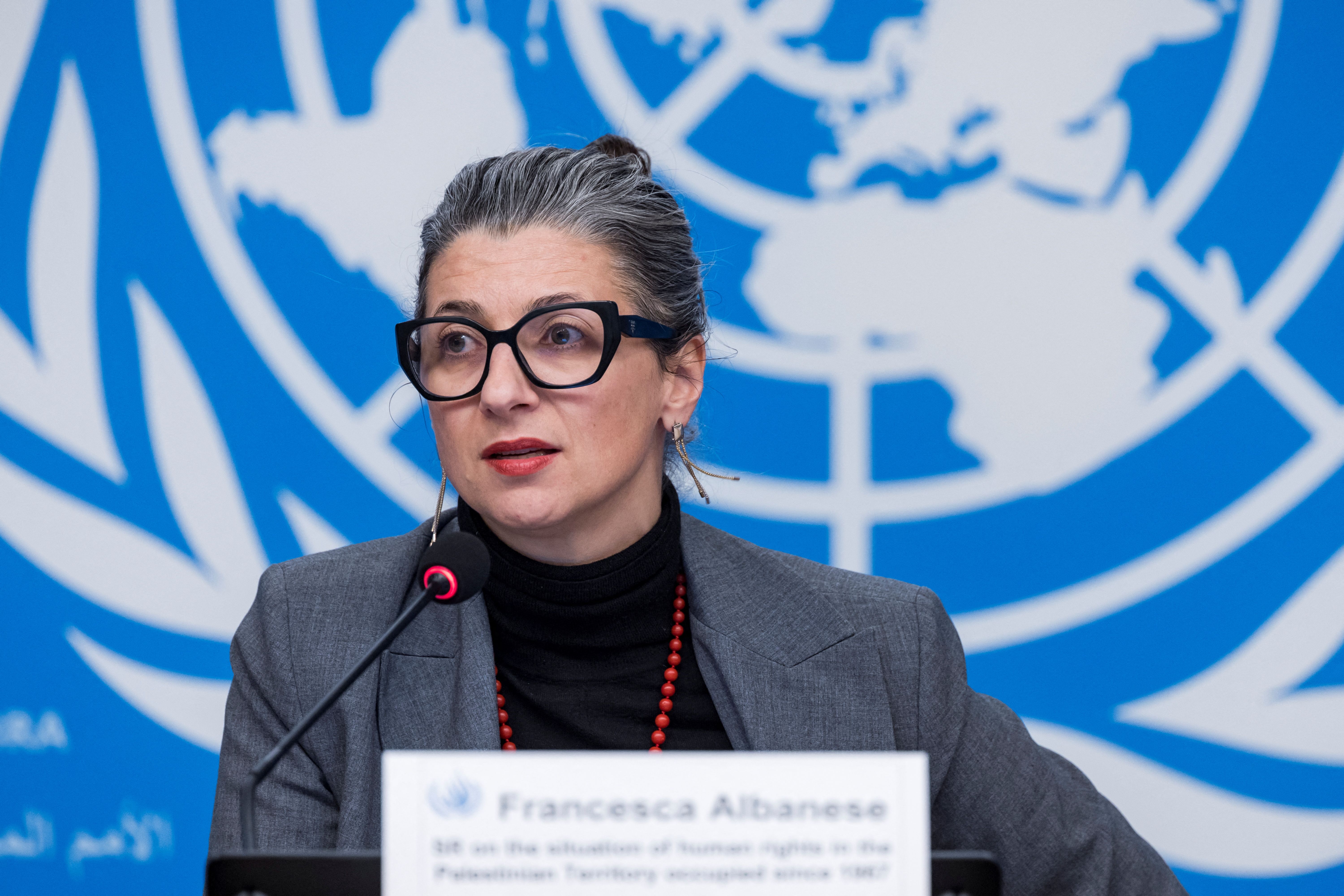
Escalating Military Checkpoint System in the West Bank Deepens the Fragmentation of Palestinian Territory
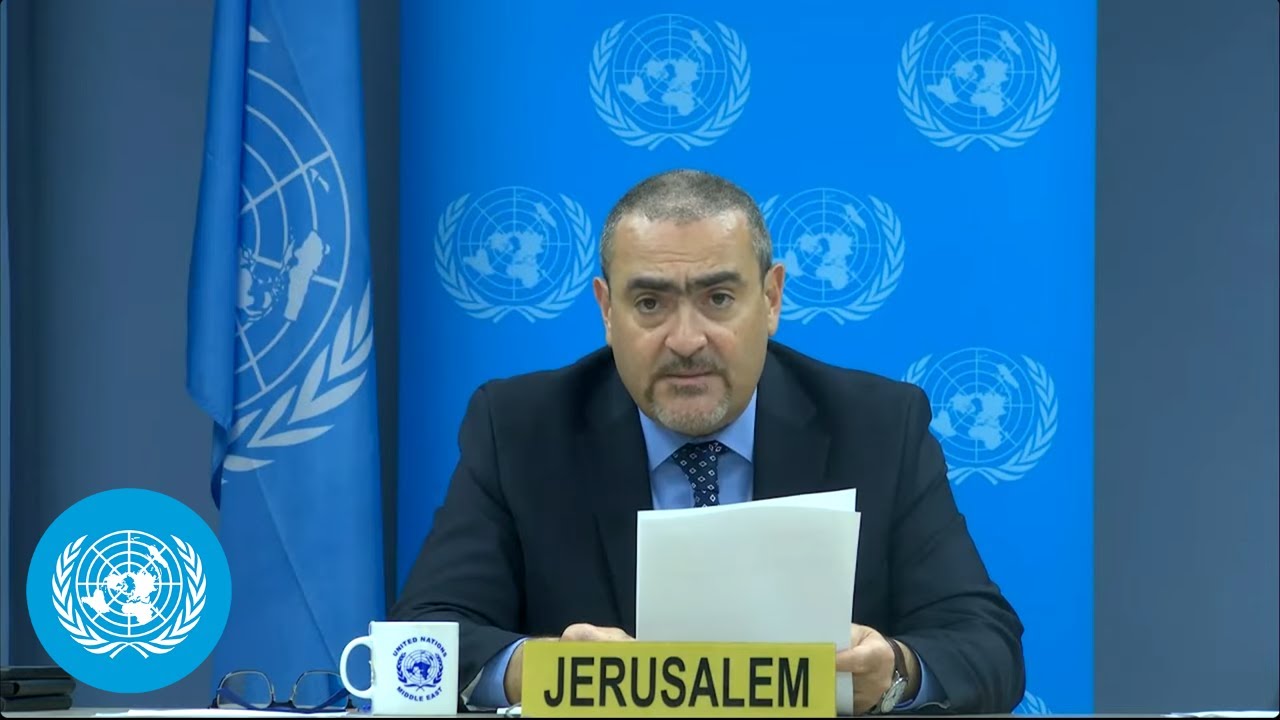
Francesca Albanese, UN Special Rapporteur on the Situation of Human Rights in the Palestinian Territory Occupied Since 1967
Escalating Military Checkpoint System in the West Bank Deepens
the Fragmentation of Palestinian Territory and Entrenches
an Arbitrary and Repressive System
3 October 2026
Francesca Albanese, the UN Special Rapporteur on the situation of human rights in the Palestinian territory occupied since 1967, warned that the expanding system of military checkpoints in the West Bank is further fragmenting Palestinian territory and deepening an arbitrary and repressive system of control that costs Palestinians precious time and severely disrupts their daily lives.
“Arbitrariness itself becomes a form of torment when every journey, every appointment and every family visit depends on whether a gate is open or a soldier allows passage.”
“Numbers alone cannot capture what this system inflicts. It steals hours and days from people’s lives, separates families, deprives students of education and workers of livelihoods, and obstructs access to life-saving health care.”
The four-month-old Palestinian infant Ahmed Zaid died in July 2026 after access to an ambulance was delayed for more than an hour at a military checkpoint. This represents a devastating example of the human consequences of this system.
Other field testimonies and data indicate that Palestinians frequently find themselves compelled to coordinate in advance with Israeli authorities in order to travel between different areas of the West Bank, including for work, education and access to medical facilities. Journeys that should take only minutes can take many hours, or become impossible altogether, depending on sudden conditions and restrictions at checkpoints.
This system of fragmentation and control must end. Palestinians must be able to move freely across their own land, live together as a people and exercise their right to self-determination. Turning this principle into reality requires an immediate response from the international community to ensure an end to discriminatory closures and to intensify humanitarian and development efforts to address their impact on Palestinian civilians.
Recent International Data and Figures
Restrictions Continue to Increase
According to a United Nations report issued in April 2026, the number of movement obstacles and checkpoints in the West Bank, including East Jerusalem, had reached approximately 925 checkpoints and other obstacles as of December 2025, affecting the movement of approximately 3.4 million Palestinians.
This was reportedly the highest number recorded in 20 years, approximately 43% above the annual average for the preceding two decades.
Statistics published in September 2026 by an independent Palestinian statistical body indicated that the number had exceeded 942 checkpoints and obstacles by the end of 2025.
Uneven Distribution of Checkpoints
A substantial proportion of permanent checkpoints is concentrated in particular areas. For example, approximately 40% of all permanent checkpoints in the West Bank—34 out of 89—are located in the H2 area of Hebron, where approximately 7,000 Palestinians live under a stringent closure regime that has intensified since October 2023.
In this area, Israeli forces impose severe movement restrictions. Only three principal checkpoints reportedly operate for limited hours each day to permit the entry of registered Palestinian residents, isolating hundreds of residents from the rest of the governorate and contributing to the transformation of the area into an “enclave” governed by stringent military restrictions.
Increase in New Movement Obstacles
UN reports documented the installation of more than 120 new road gates during 2025, in addition to dozens of new partial checkpoints. Consequently, gates reportedly constituted more than 41% of all movement obstacles by the end of 2025.
These obstacles significantly lengthen Palestinian journeys and travel routes. One study documented that the journey between Beit Furik and Nablus, which would ordinarily take approximately 15 minutes, could take more than five hours and, on some days, as long as ten hours because of the single gate controlling access to the town.
Wide-Ranging Impact on Daily Life
More than half of the Palestinians surveyed in a field study reported that checkpoints had adversely affected their own employment opportunities or those of their spouses.
A World Health Organization report also documented 233 incidents involving attacks on or obstruction of health facilities and medical personnel in the West Bank during 2025. According to the figures cited, 84% involved restrictions on access through checkpoints, including delays, searches and the detention of ambulances.
In addition, approximately one-third of patient permit applications to access hospitals in Jerusalem and Israel were reportedly denied in 2025, compared with an 18% rejection rate in 2022. These restrictions further constrain Palestinians’ access to health care through administrative and military measures.
Territorial Fragmentation and Other Restrictions
UNRWA data and human rights reports indicate that these restrictions do not operate in isolation but form part of a broader system of movement restrictions that has existed since 1967.
Work and travel permits, the Separation Barrier, and the designation of parts of the West Bank as closed or temporary military zones all contribute to restricting access to public services, agricultural land and social life.
According to UN reporting, these measures obstruct access to services and resources, fragment family and social life, undermine livelihoods and contribute to the territorial fragmentation of the West Bank, with cumulative consequences for Palestinians’ economic, social and cultural rights.
Human Rights and Legal Dimensions
Right to Freedom of Movement
Under international human rights law and international humanitarian law, freedom of movement is a recognized right.
The United Nations has maintained that Israeli authorities have obligations under international law concerning Palestinian movement within the occupied territory and that restrictions must be justified by legitimate and specific security considerations.
Restrictions that go beyond reasonable security requirements—including unpredictable checkpoint closures and arbitrary control over movement—may therefore raise serious questions regarding compliance with obligations toward the protected civilian population.
Impact on Fundamental Rights
The current checkpoint system affects a broad range of fundamental rights, including the rights to health, education, work and family life.
Checkpoint restrictions can delay or prevent patients from reaching hospitals, as illustrated in the report by the death of infant Ahmed Zaid. Checkpoints can also separate families, undermine social cohesion and prevent students from reaching schools and universities, raising concerns under international standards concerning children’s rights and the right to education.
These restrictions operate alongside policies that further undermine the geographic contiguity of Palestinian territory. According to the independent reporting cited in the text, some movement obstacles close or divert major routes, including Road 60, forcing Palestinians onto longer and more complicated secondary road networks.
Territorial Fragmentation and Economic Harm
The impact of checkpoints also takes the form of territorial fragmentation, whereby Palestinian towns and villages increasingly become “isolated enclaves” separated from one another by military barriers.
According to the Special Rapporteur, Palestinian communities are increasingly transformed into separate cells within what she has characterized as a “carceral regime,” with their connectivity determined by the occupying power.
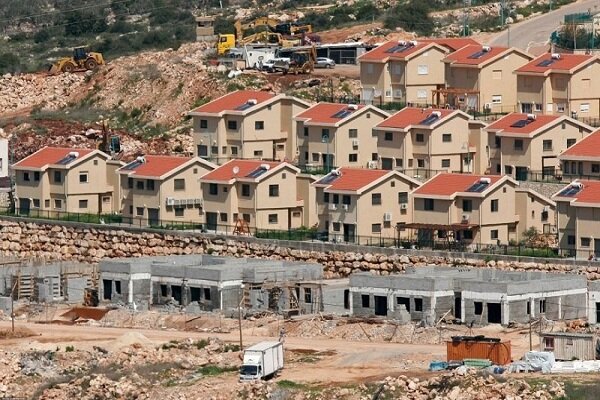
This situation intersects with other policies, including settlement expansion, demolitions and land seizure, as documented in areas including Wadi al-Hummus, Beit Furik and the eastern highlands. These measures impede the development of a coherent and independent Palestinian economy.
In its July 2024 Advisory Opinion, the International Court of Justice addressed Israel’s policies and practices and their effects on the territorial integrity of the Occupied Palestinian Territory and the Palestinian people’s right to self-determination. The Court concluded, inter alia, that Israel’s continued presence in the Occupied Palestinian Territory is unlawful and stated that it must be brought to an end “as rapidly as possible.”
The Special Rapporteur has also criticized the international community’s failure to give effect to the Court’s findings, characterizing continued inaction in terms of complicity.
International Legal Obligations
The Fourth Geneva Convention and the Hague Regulations provide important legal frameworks for assessing the situation.
As an occupying power, Israel has obligations toward the civilian population in territory under its control. Article 33 of the Fourth Geneva Convention prohibits collective penalties, while the Hague Regulations contain protections concerning private property and the administration of occupied territory.
Medical care also enjoys particular protection. Article 56 of the Fourth Geneva Convention imposes obligations concerning medical and hospital establishments and services, public health and hygiene in occupied territory.
Restrictions on movement must therefore be assessed against applicable requirements of international humanitarian law and international human rights law, including necessity and proportionality where relevant.
Supporting International Legal Frameworks
At the international level, numerous United Nations resolutions have addressed Israeli settlement activity and the situation of Palestinians in the Occupied Palestinian Territory.
UN Security Council Resolution 2334 (2016), for example, reaffirmed that Israeli settlements in the Palestinian territory occupied since 1967, including East Jerusalem, have no legal validity and constitute a flagrant violation under international law.
UN human rights bodies have similarly continued to address Israel’s obligations regarding the fundamental rights of Palestinians in the occupied territory.
Within this broader context, Albanese’s statement and reports by international organizations underscore the urgency of applying international legal protections to prevent further deterioration of the humanitarian and human rights situation associated with movement restrictions.
Conclusion and Recommendations
The situation described in the report points to the need to safeguard Palestinians’ freedom of movement within the Occupied Palestinian Territory and to end restrictions that unnecessarily or disproportionately disrupt essential aspects of civilian life.
Any security-related restrictions on movement should have a lawful basis, respond to concrete security requirements, comply with applicable standards of necessity and proportionality, and remain subject to appropriate legal and international scrutiny.
The broader humanitarian consequences—including impediments to medical care, education, employment, family life and access to agricultural land—must also be addressed as integral components of the human rights impact of the checkpoint system.
End.