Fact statements
October 4, 2026Financial Times Report:

Israeli Finance Ministry Allocates $11.7 Million for Land Registration in the West Bank and East Jerusalem
Financial Times Report:
Israeli Finance Ministry Allocates $11.7 Million for Land Registration in the West Bank and East Jerusalem Ahead of Israeli Elections, Raising Concerns Over Facilitating Land Transfers and Consolidating Israeli Control
4 October 2026
The central conclusion presented by the Financial Times in its report, titled “Israelis race to push new settlement projects past point of no return before election”, is that Benjamin Netanyahu’s government is accelerating settlement-related projects and administrative measures in the occupied West Bank and East Jerusalem ahead of the Israeli elections scheduled for 27 October 2026.
The objective, according to the report, is to push as many projects as possible beyond their initial procedural stages, making it politically and practically more difficult for a future government to reverse them.
The newspaper quoted Yonatan Mizrachi of Peace Now as saying that the government is seeking to create “facts on the ground” that would be extremely difficult for any subsequent government to undo.
The E1 Settlement Project
One of the report’s most significant areas of focus is the E1 project, east of Jerusalem.
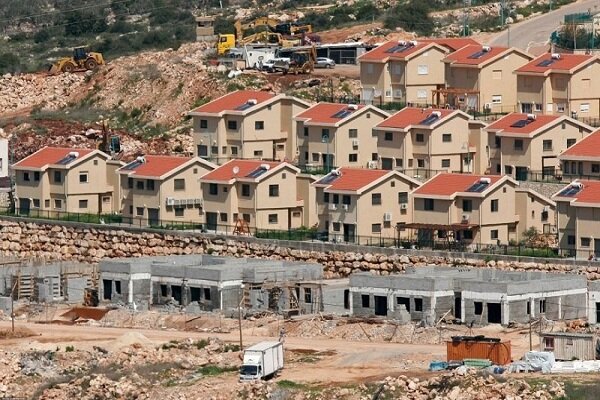
According to information cited in the report, Israel’s Housing Ministry issued a tender in August for approximately 1,200 settlement housing units, followed by another tender for roughly 2,100 additional units, bringing the total to around 3,300 units.
Notably, bidding for the latter tender is reportedly scheduled to begin just two days before the Israeli election.
The significance of E1, according to the Financial Times report and related coverage, lies in its strategic location between Jerusalem and the settlement of Ma’ale Adumim.
Large-scale settlement expansion in this area could further fragment Palestinian territorial contiguity between the northern and southern West Bank and further isolate East Jerusalem from its Palestinian surroundings.
Land Registration: 36 Million Shekels
The report also examines an initiative led by the Israeli Finance Ministry, headed by Bezalel Smotrich, to allocate approximately NIS 36 million, equivalent to around $11.7 million, for land-registration procedures in the West Bank and East Jerusalem.
Human rights organizations have warned that these registration mechanisms could facilitate the transfer of extensive areas of land into Israeli state ownership or otherwise strengthen Israeli control over them.
This issue is particularly significant because it extends beyond the construction of settlement housing units. It relates to the restructuring of the legal and administrative framework governing land ownership, planning and registration.
The Financial Times had previously examined this broader process in a report titled “Netanyahu’s West Bank plan: annexation by law”, which discussed the transfer and expansion of Israeli civilian powers relating to land and planning in the West Bank.
19 New Settlements and a Return to Previously Evacuated Sites
The Financial Times report also refers to plans to establish 19 new settlements in the northern West Bank, alongside measures aimed at re-establishing settlement presence at locations that had previously been evacuated.
One example cited is the former settlement of Kadim, near Jenin, which was evacuated in 2005.
Other media reports have quoted Smotrich as saying that the E1 project is intended to eliminate the possibility of establishing a Palestinian state.
He has also spoken of a vision to increase the number of Israeli settlers in the West Bank and East Jerusalem to one million, compared with approximately 750,000 at present.
The Link Between Settler Violence and Settlement Expansion
The report does not examine settlement construction separately from settler violence.
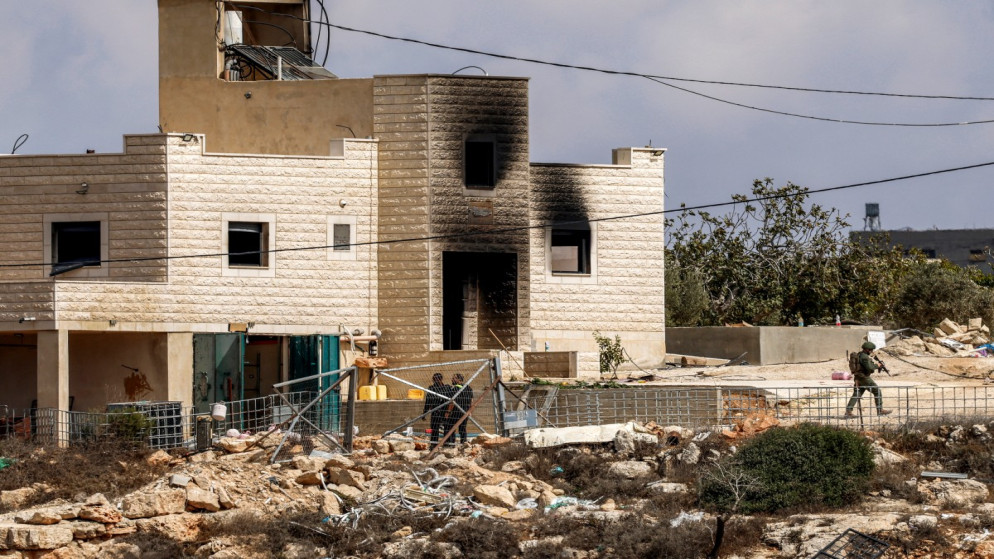
It cites Peace Now as arguing that attacks in some areas are, in practice, helping force Palestinian communities from their land, after which settlement outposts or settlements are established on or near the vacated areas.
The settlement of Metzokei Eretz is cited as one example of settlement activity established near Palestinian communities that had experienced displacement.
According to figures attributed to the United Nations Office for the Coordination of Humanitarian Affairs (OCHA), approximately 6,100 settler attacks against Palestinians and their property have been recorded since Netanyahu’s coalition returned to power in 2022.
More than 6,500 Palestinians have reportedly been displaced, while 132 Palestinian communities have been affected by either complete or partial displacement.
The report also cites data from the Israeli human rights organization Yesh Din, according to which only around 3 per cent of Israeli investigations into offences committed by Israelis against Palestinians in the West Bank between 2005 and 2024 resulted in convictions.
What Does “Entrenching the Settlements” Mean in This Context?
The term does not refer to a single formal declaration of annexation.
Rather, it describes the advancement of a broad range of settlement-related projects and decisions to increasingly advanced legal, administrative and financial stages before the election.
These measures include:
issuing construction tenders;
registering land;
establishing new settlements;
restoring previously evacuated settlements; and
consolidating the administrative infrastructure required for further settlement expansion.
According to the Financial Times’ analysis, once these measures reach advanced stages, reversing them becomes substantially more difficult and politically costly, even if the governing coalition changes after the election.
This is the context in which the expression “facts on the ground” is used: the creation of physical, legal and administrative realities that become increasingly difficult to reverse.
End.